Construction Equipment
 Cranes
 Material Handling
 Trucks & Trailers
 Vehicles
 Agricultural Equipment
 Live Auctions
Post Date:
Aug 14, 2026
|

Mining Without Drivers: Inside The World's First 100-Truck Autonomous Electric Mining Fleet
Since its debut in 2025, the world's first fleet of 100 completely autonomous, all-electric haul trucks has shown how autonomous driving, electrification, AI, and 5G connection will alter large-scale mining. The project, which is being carried out in the Huaneng Yimin Open-Pit Coal Mine in Inner Mongolia, China, serves as a roadmap for the future of intelligent, zero-carbon mining.
Mining Without Drivers: Inside The World's First 100-Truck Autonomous Electric Mining Fleet
Since its debut in 2025, the world's first fleet of 100 completely autonomous, all-electric haul trucks has shown how autonomous driving, electrification, AI, and 5G connection will alter large-scale mining. The project, which is being carried out in the Huaneng Yimin Open-Pit Coal Mine in Inner Mongolia, China, serves as a roadmap for the future of intelligent, zero-carbon mining.
Post Date:
Aug 14, 2026
|
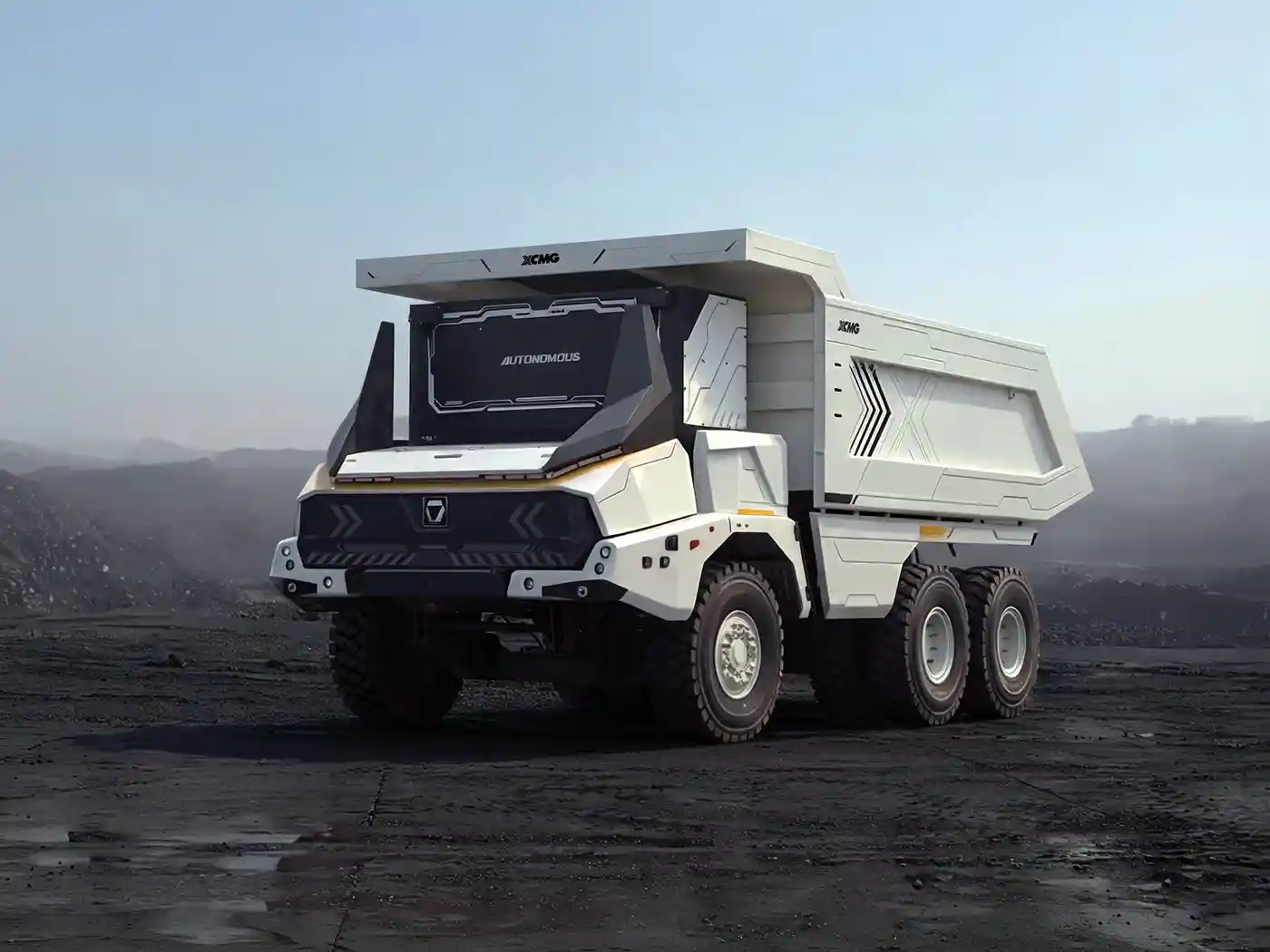
Dubai (PlantAndEquipment.com) - More than a year after its debut, the world's first fleet of 100 completely autonomous, all-electric haul trucks has shown that driverless, zero-carbon mining is no longer a pipe dream.
The autonomous Huaneng Ruichi fleet, which operates at the Huaneng Yimin Open-Pit Coal Mine in Inner Mongolia, China, has proven that electrification, artificial intelligence, and advanced connectivity can boost productivity, improve safety, and reduce emissions in one of the world's most demanding industrial environments.
The fleet, which was commissioned in May 2025, runs on a specialized Huawei 5G-Advanced (5G-A) network that allows for real-time communication between cars, infrastructure, and central control systems. XCMG developed the project, which established Yimin Mine as the world's first mining operation to use a fleet of 100 fully autonomous, all-electric haul trucks.
An Intelligent Mining Ecosystem
Rather than merely replacing diesel-powered haul trucks with battery-electric vehicles, the project combines autonomous driving, AI-powered safety management, smart battery-swapping technology, 5G connection, and photovoltaic-generated energy to create a unified intelligent mining environment.
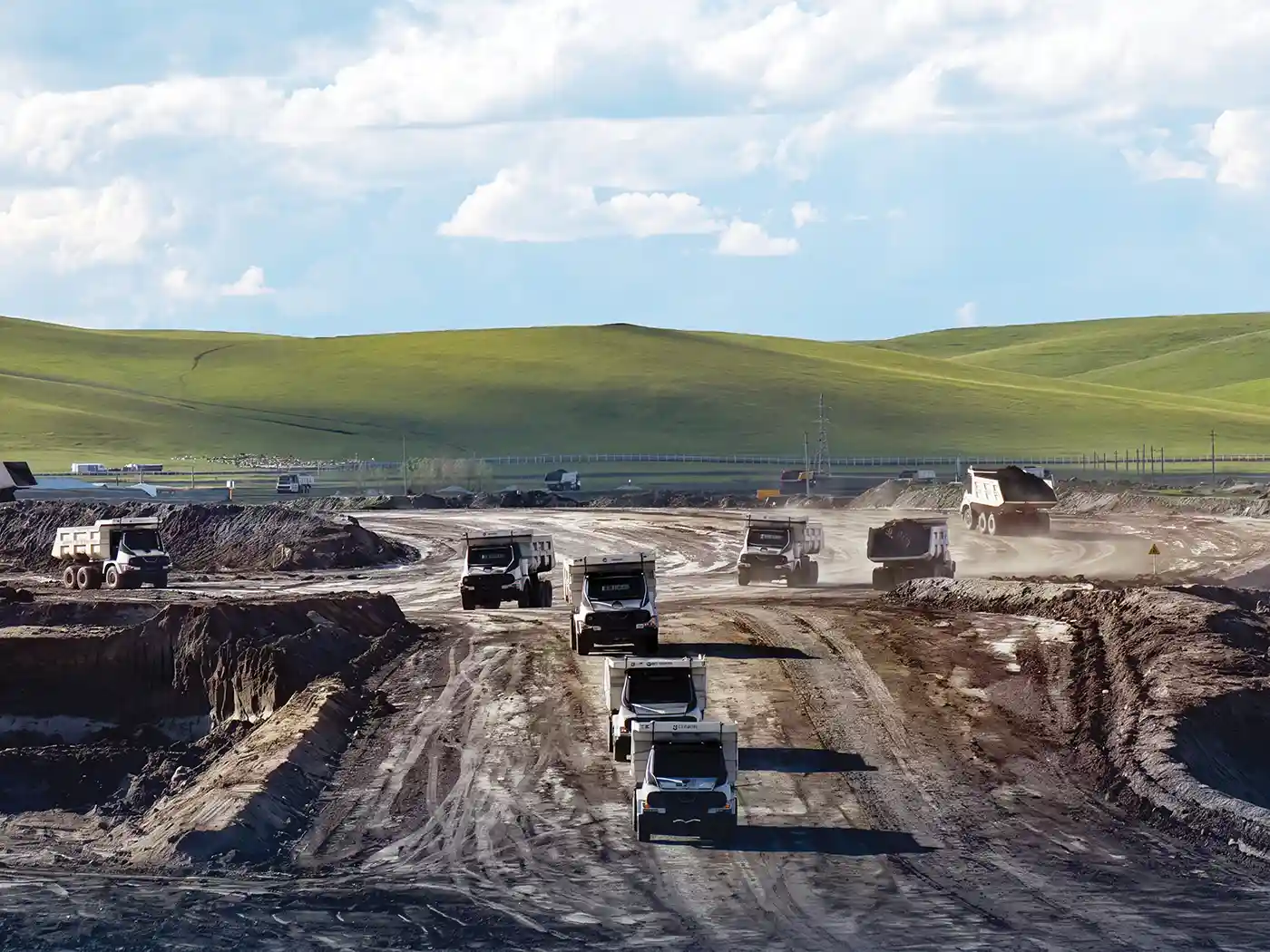
For XCMG, the project represents more than the deployment of new equipment.
"This initiative represents a convergence of energy, technological, equipment, and commercial revolutions," says Yang Dongsheng, chairman of XCMG Group and XCMG Machinery.
He says collaboration between technology providers and industry partners has been fundamental to creating what the company believes is a new model for intelligent mining.
"By partnering with industry leaders, XCMG has delivered a world-class blueprint for global green, intelligent mining," says Yang. The result is an operation where autonomous vehicles communicate continuously across the mine, allowing fleet movements to be coordinated while supporting safer, more efficient haulage.
Delivering Performance in Extreme Conditions
Since their inception, the autonomous trucks have shown their capacity to operate dependably in some of the hardest mining conditions.
According to XCMG, the fleet can function in temperatures as low as -40°C, allowing for uninterrupted, round-the-clock production even in harsh weather situations.
Battery management is equally vital for productivity. The mine's automatic battery-swapping technology replaces exhausted batteries in under six minutes, reducing downtime and allowing trucks to return to duty without operator intervention.
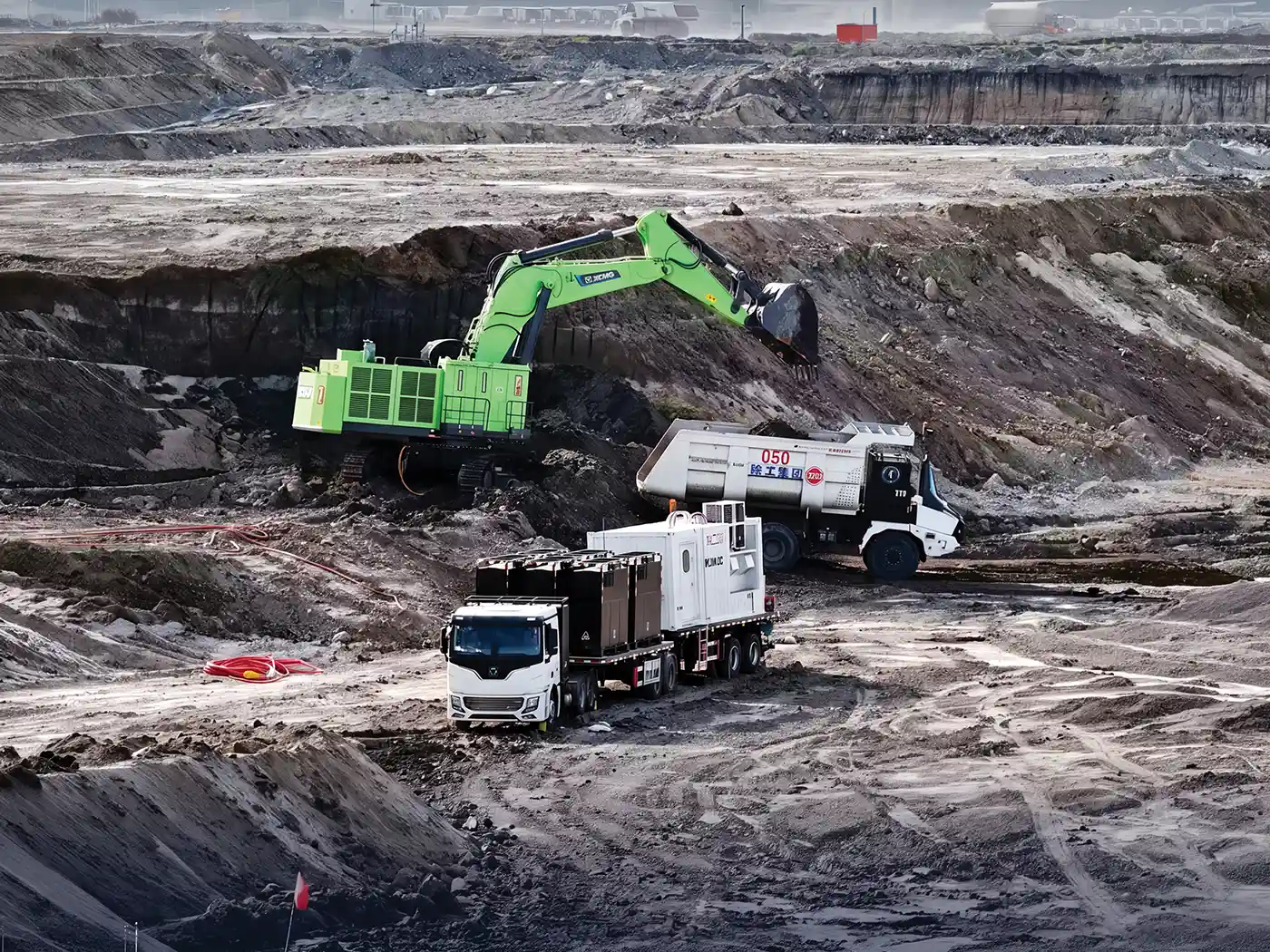
Operational performance has also surpassed that of traditional mining fleets. According to XCMG, autonomous trucks outperform standard human fleets by 120%, demonstrating the benefits of intelligent scheduling, continuous operation, and integrated fleet management.
The environmental advantages are equally considerable. The company's 100-truck fleet replaces over 15,000 tons of fuel use and reduces 48,000 tonnes of CO₂ emissions yearly. This highlights the importance of autonomous electric fleets in meeting decarbonization objectives for mining businesses.
Accelerating Digital Transformation
Beyond productivity and emissions reductions, the project is also demonstrating how digital technologies are reshaping mining operations. Li Shuxue, chairman of Huaneng Inner Mongolia East Energy Co., Ltd., says the deployment combines artificial intelligence with zero-carbon technologies to modernise the mining industry.
"This fully domestic, zero-carbon solution empowers mining with AI, enhances safety, and accelerates the industry's digital transformation," says Li.
His remarks mirror a larger trend in the mining industry, where automation, artificial intelligence, and digital connection are increasingly being used together to enhance operational decision-making, decrease risk, and optimize asset performance.
The project also emphasizes China's expanding investment in building innovative domestic mining equipment that can compete on a global scale.
Building the Mine of the Future
While the autonomous haul trucks represent a significant milestone, XCMG sees them as the first step in a much broader strategy.
"Starting with autonomous electric trucks, we will expand to unmanned excavators, drilling rigs, and loaders, creating a comprehensive zero-carbon, unmanned mining ecosystem," says Yang.
The company's long-term vision is to create fully integrated mining operations where multiple autonomous machines work together within a connected digital environment, reducing the need for manual intervention while improving efficiency across the entire mine.
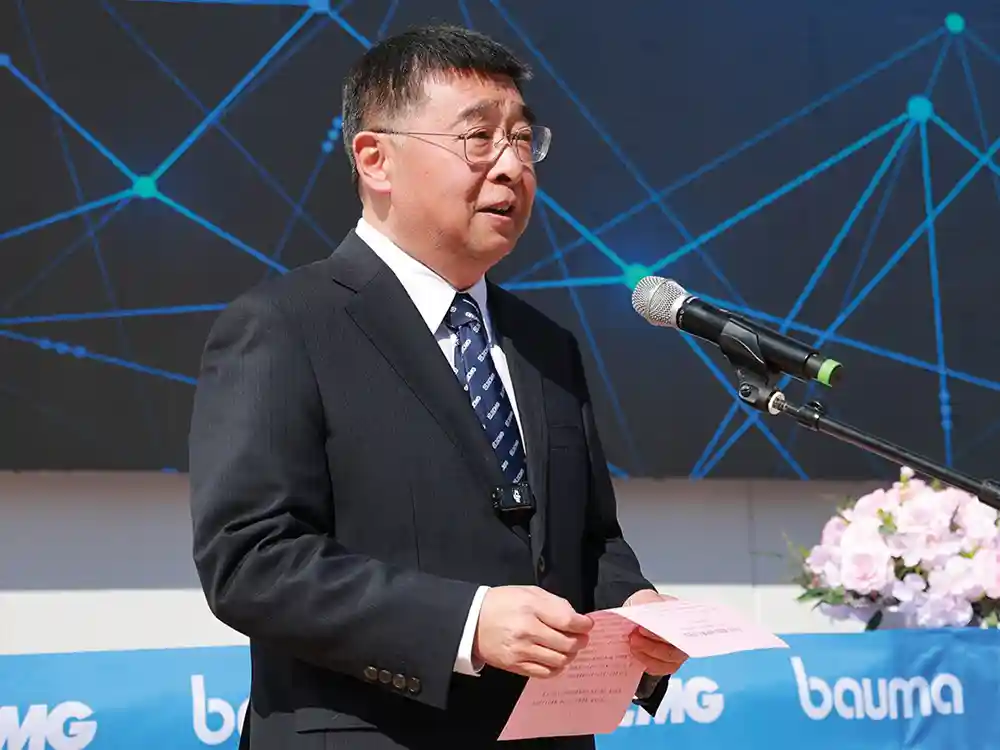
Yang Dongsheng, Chairman of XCMG Group and XCMG Machinery.
Setting a New Benchmark
For Huaneng, the project also represents an important step towards strengthening China's domestic mining capabilities.
"It is a pivotal step toward overcoming reliance on imported heavy equipment and advancing China's high-quality development in mining," says Li.
After more than a year of operation, the Yimin Mine project has progressed from a technical demonstration to a successful example of autonomous, zero-carbon mining on an industrial scale. By merging electrification, autonomous vehicles, AI, sophisticated connectivity, and renewable energy into a unified working environment, the project provides a window into how mines of the future may run.
As mining companies around the world strive to improve safety, increase productivity, and reduce emissions, the Huaneng Ruichi fleet's success demonstrates that the technologies required to achieve those goals are no longer experimental; they are already producing results in one of the world's largest open-pit mining operations.