Construction Equipment
 Cranes
 Material Handling
 Trucks & Trailers
 Vehicles
 Agricultural Equipment
 Live Auctions


Post Date:
Aug 27, 2026
|

Beyond The Walk-Around: What Oil, Blow-By And A Feel For Play Reveal About A Used Machine
Beyond The Walk-Around: What Oil, Blow-By And A Feel For Play Reveal About A Used Machine
Post Date:
Aug 27, 2026
|
Brought to you by
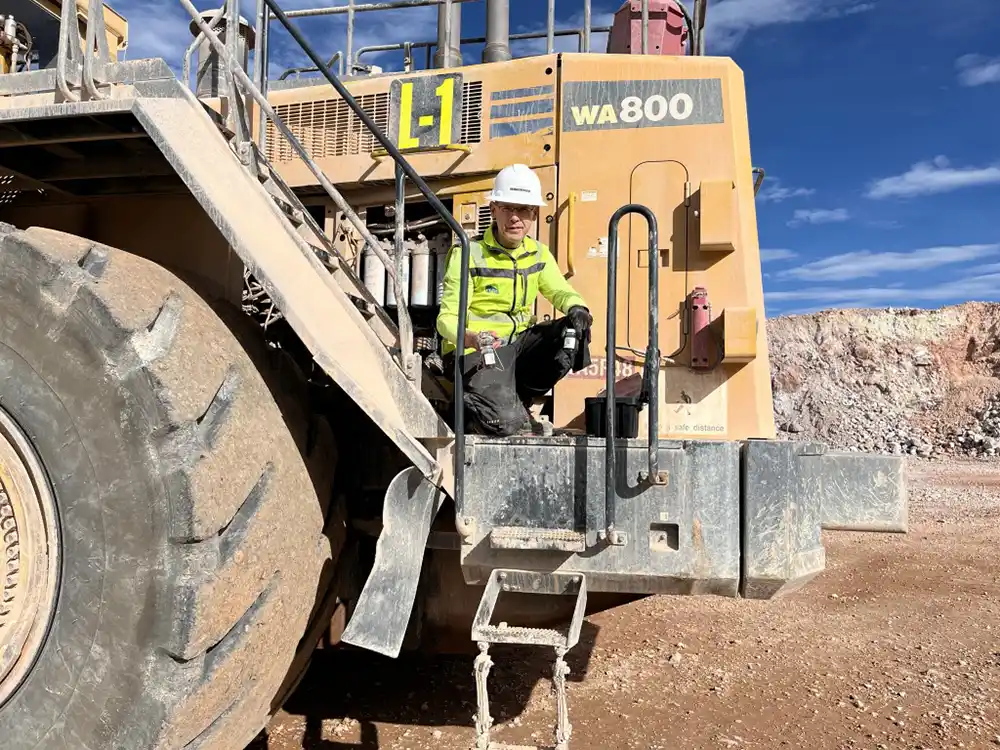
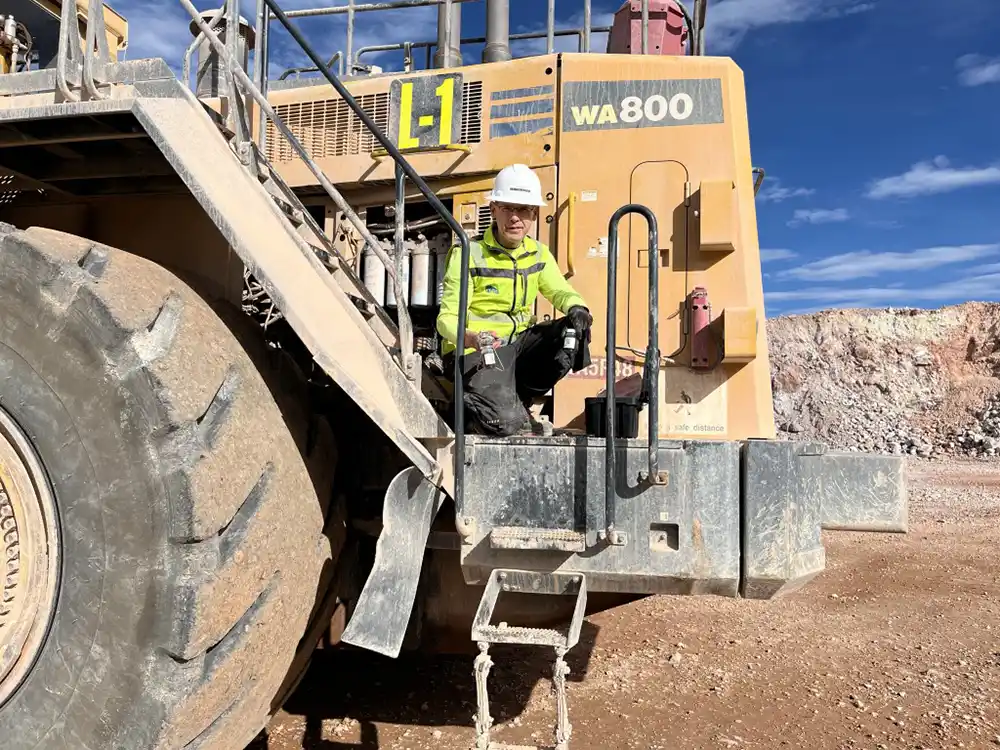
A used excavator can look flawless from the cab. Clean paint, quiet idle, tight hydraulics on a quick test cycle — and still be six months from an expensive rebuild. The difference between a machine that just looks fine and one that really is fine usually isn't visible. It shows up in the oil, in the blow-by numbers, and in how much play sits in a pin joint that nobody thought to check properly. At MEVAS, this is where a real inspection starts.
Reading the Fluids
Oil and coolant analysis is one of the most underused tools in used-equipment buying, largely because it doesn't produce a dramatic finding on the spot — the results come back from the lab days later. But they're worth the wait. Metal particles in the oil sample point to exactly which components are wearing (iron suggests cylinder or gear wear, copper points to bushings or bearings), while silica levels reveal whether dirt has been getting past a seal or a poorly maintained air filter. Coolant tells its own story: oxidation, fuel or oil in the coolant circuit is an early sign of failing components, often long before it shows up as a symptom the operator would notice. None of this is visible during a walk-around, and none of it can be faked by cleaning the machine before a viewing.
Blow-By: Putting a Number on Engine Wear
Listening to an engine and watching the exhaust for smoke is a start, but it's a rough one. Measuring blow-by — the volume of combustion gas escaping past the piston rings into the crankcase — gives an actual figure to work with instead of an impression. Rising blow-by is one of the most reliable early indicators of piston ring and cylinder liner wear, and tracking it against the manufacturer's baseline tells an inspector how much life is realistically left in the engine, not just whether it currently runs.
The Feel for Play
Checking clearance in tilt cylinders, articulation joints and boom cylinders sounds simple, but it's one of the skills that takes the longest to learn. Play in these pivot points doesn't reveal itself if you shove the attachment around forcefully — hydraulic pressure and the machine's own weight mask exactly what you're trying to measure. Experienced inspectors instead use small, deliberate, controlled movements, isolating one joint at a time and feeling for the exact moment clearance takes up before resistance builds. It's a slow, careful process, and it's precisely the kind of judgment a checklist alone can't teach — it comes from having done it many times, on hundreds of different machines.
Why This Level of Detail Matters
A machine can pass every visual check and still carry the kind of wear that only shows up in a lab result or under a trained hand on a cylinder. Some of the above tests are routine with a Mevas inspection. Some can be ordered as an option.
Whether you need a machine inspected or your own team trained to do it, our network in more than 25 countries is available to help. MEVAS is your independent service partner for the inspection of construction machinery. Have used heavy equipment inspected by a third party before you buy it. The service is available in more than 25 countries.
Sponsored by
MEVAS is your independent service partner for the inspection of construction machinery. Our service is inspection at the highest technical level for all types of larger machinery. Have used heavy equipment inspected by a third party before you buy it. Available in more than 25 countries.


Sponsored by
MEVAS is your independent service partner for the inspection of construction machinery. Our service is inspection at the highest technical level for all types of larger machinery. Have used heavy equipment inspected by a third party before you buy it. Available in more than 25 countries.
This article was written and sponsored by MEVAS Global Heavy Machinery Inspections.
To feature your business in sponsored content, contact: [email protected]

Message Today