Construction Equipment
 Cranes
 Material Handling
 Trucks & Trailers
 Vehicles
 Agricultural Equipment
 Live Auctions

Post Date:
Jul 10, 2026
|

Beyond The Sale
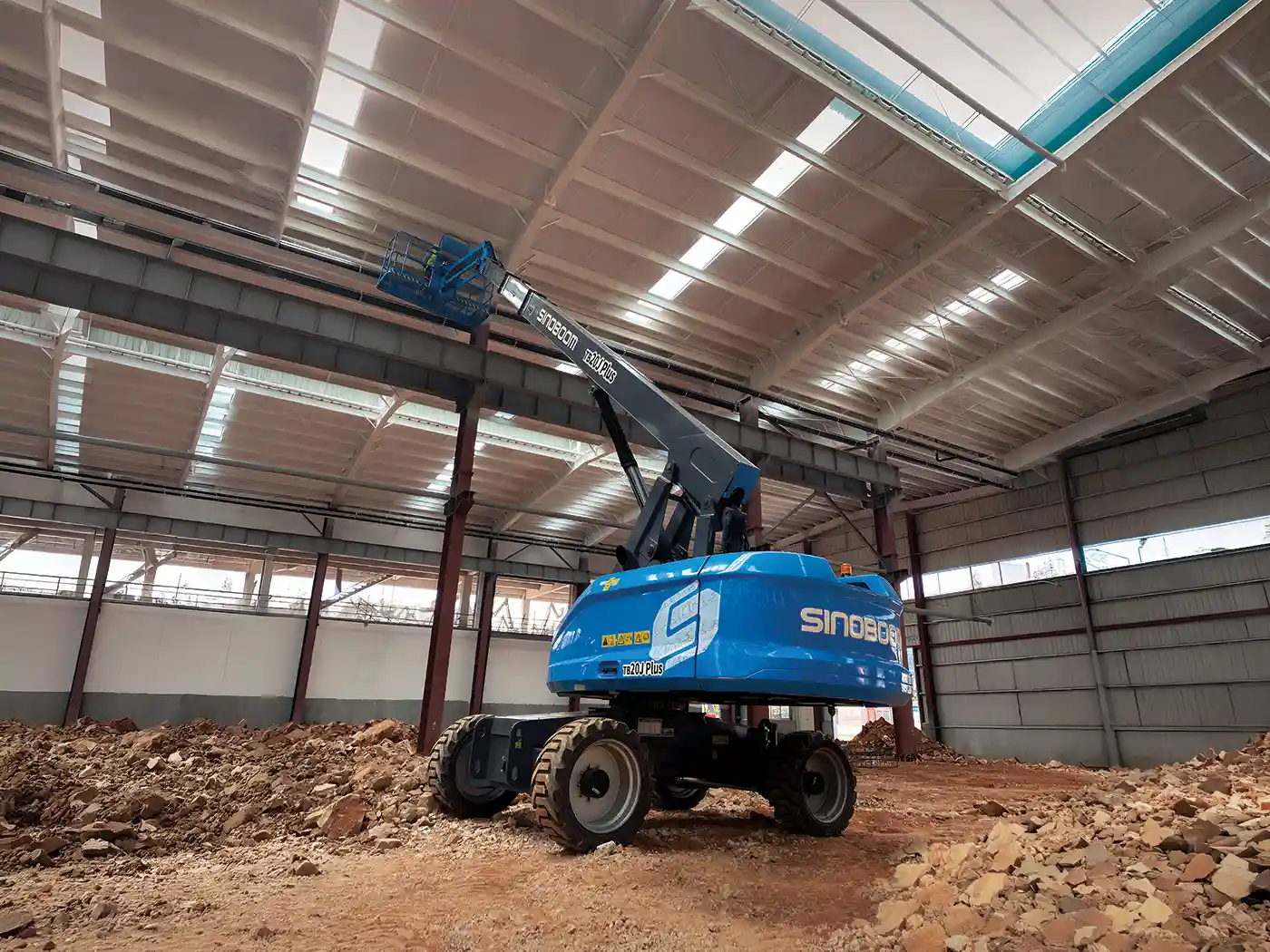
Sinoboom brings a lot more than just its equipment to the table. A Sinoboom machine gives its buyer not only a product and service, but also an entire supporting cast of after-sales assistance and a local team to manage unforeseen incidents.
Beyond The Sale
Sinoboom brings a lot more than just its equipment to the table. A Sinoboom machine gives its buyer not only a product and service, but also an entire supporting cast of after-sales assistance and a local team to manage unforeseen incidents.
Post Date:
Jul 10, 2026
|
Brought to you by
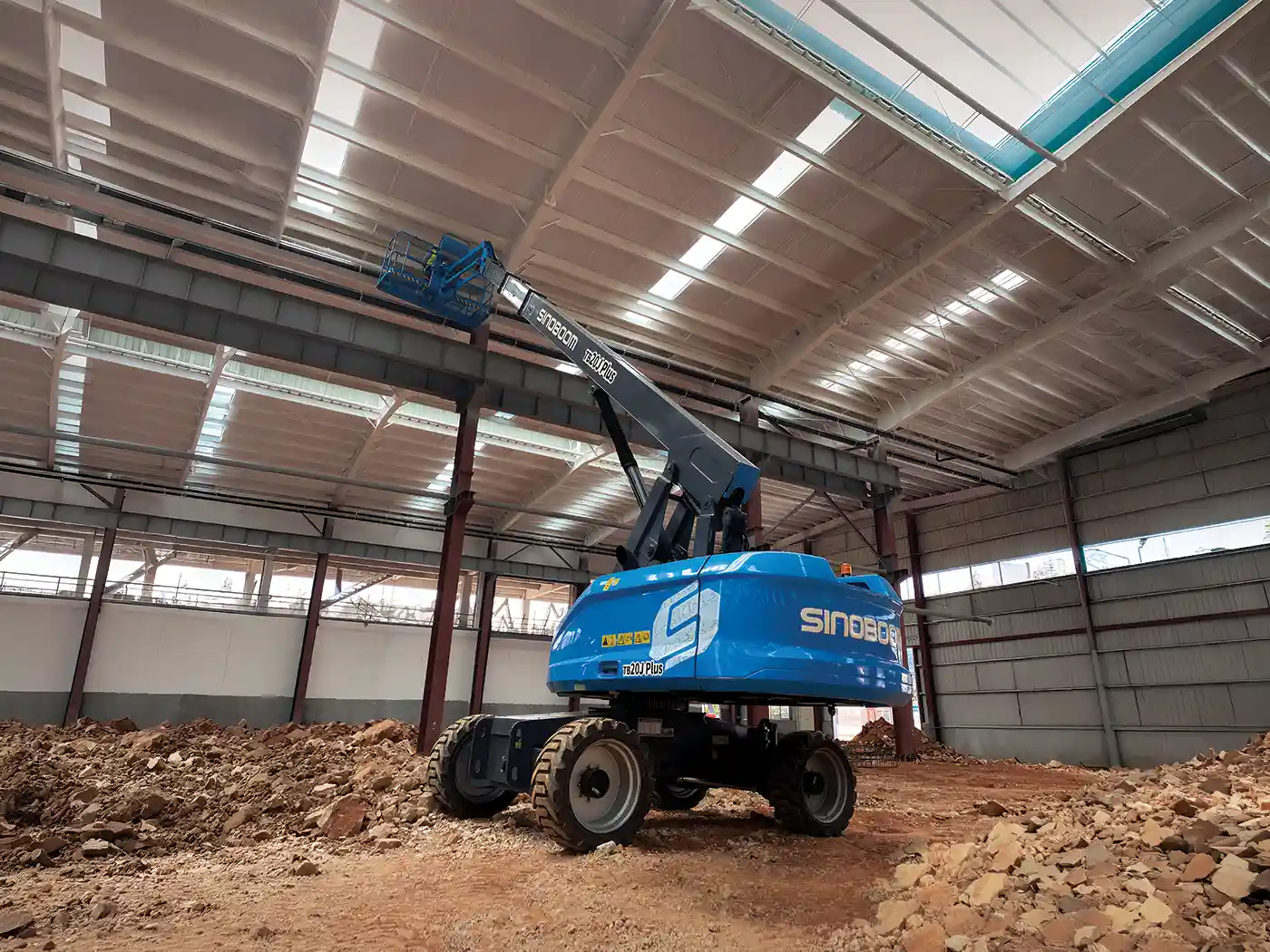
Dubai (PlantAndEquipment.com) - The Middle East access market is no longer in a transition phase. It has shifted. What remains now is the adjustment to that shift, and that is where the real competition is happening. Equipment is still moving into the region at scale, driven by infrastructure, logistics expansion, energy projects, and the continued build-out of major urban and regional developments.
While price is still part of the conversation, it is not the main character. What sits around it is everything that happens after delivery. Uptime, response time, service density, parts availability, and the physical proximity of support teams are the real filters through which procurement decisions are made. In practical terms, buyers are looking at what it takes to keep machines running day after day on active sites, not only what it costs to acquire them. Or as Alistair A. Palacioglu, Vice President and General Manager, Sinoboom MEA, puts it, “Customers in this region don’t simply buy machines — they buy confidence, uptime, and support.”
That shift is what has quietly redefined how OEMs are expected to operate in the Middle East. The export model, which still exists in parts of the industry, is increasingly out of step with what the market actually demands on the ground. What is replacing it is something much more embedded, where manufacturers are expected to carry operational weight inside the region rather than from outside it. Sinoboom’s Dubai setup was built directly around that reality from the start.
“When we established the Dubai subsidiary, our objective was simple: build a fully localised operation that could support customers at the same level as any leading global OEM,” Palacioglu says. What that translates to today is a structure that goes beyond sales activity. There is a regional headquarters function, a parts hub that is being scaled, technical teams operating closer to live projects, training capability, and a dealer network that is still expanding across the Middle East and Africa. It is still being built out, but the direction is clear enough. The emphasis is not on presence for its own sake, but on reducing friction in the field, particularly when equipment is under pressure and downtime cannot easily be absorbed by operations.
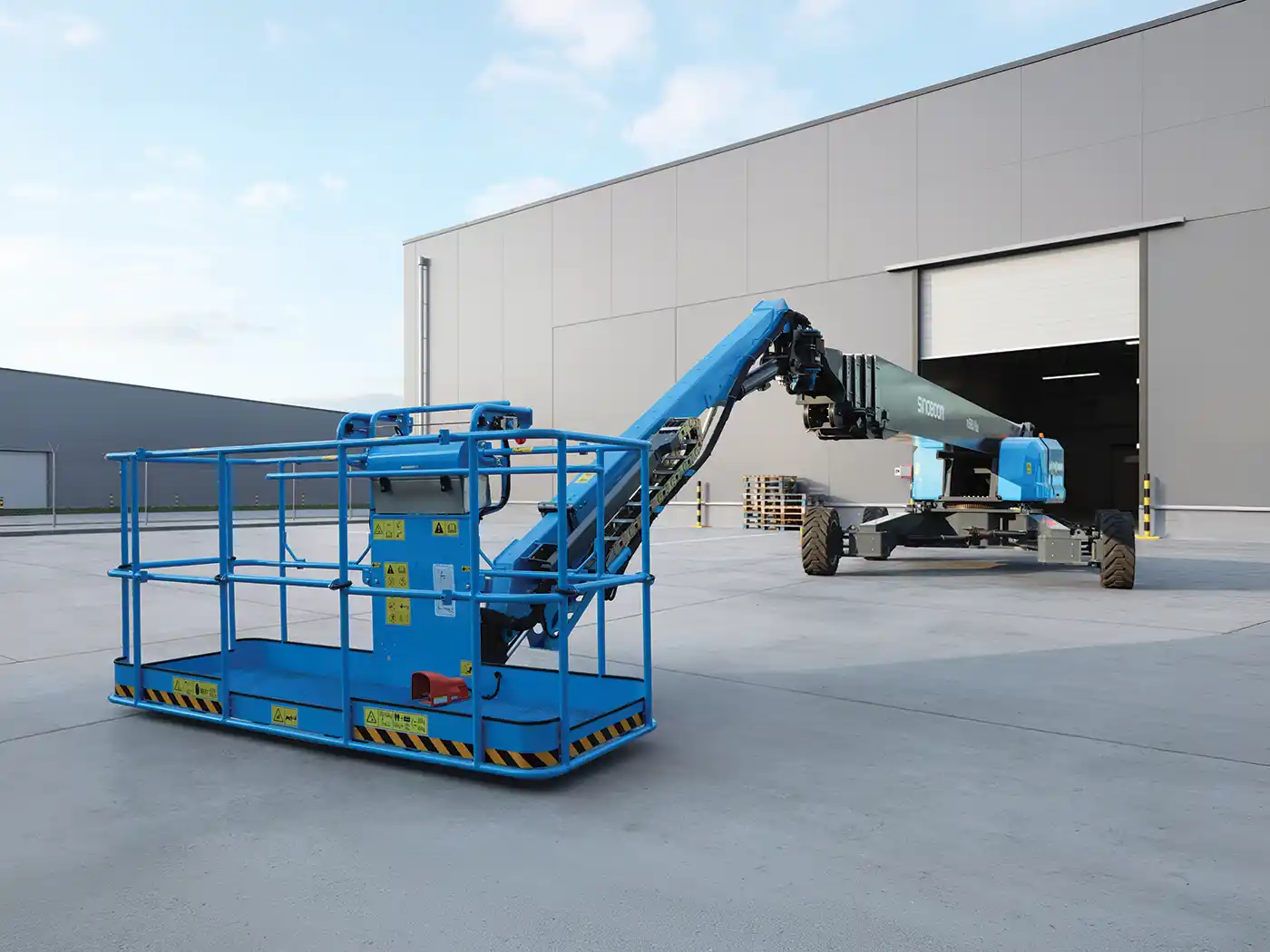
The involved buyer
The more interesting change, though, is not structural. It is behavioural. Customers are not engaging with OEMs in the same way anymore. The conversations are longer, more technical, and far more focused on lifecycle performance rather than purchase decisions. Palacioglu is quite direct about this shift, noting, “What has surprised me most is the speed at which the market has evolved. Customers are more informed than ever, they understand total lifecycle costs, and they expect manufacturers to be present locally.”
That expectation has consequences that ripple through everything else. If presence is required, then proximity becomes commercial value. If proximity becomes value, then service infrastructure stops being support and becomes part of the product itself. That is where the pressure point in the MEA market now sits, particularly in sectors such as oil and gas, ports, petrochemicals, and large infrastructure projects where machines are not idle assets but constantly working units expected to perform under continuous stress.
Regional considerations
“The Middle East is one of the most demanding operating environments in the world,” Palacioglu notes, and that statement is not positioned as differentiation but as a baseline reality. High heat, dust, long duty cycles, and remote job sites create conditions where equipment weaknesses surface quickly and repeatedly. Nothing stays hidden for long in this environment.
That is also where product adaptation has become more immediate. The old cycle of global specification followed by slow regional adjustment is not really what is happening anymore. Feedback is coming from the field in the GCC in a much more direct way, and it is shaping changes faster than traditional engineering cycles would normally allow. Cooling systems, filtration setups, and heavy-duty configurations are increasingly being adjusted based on what is actually happening on site rather than what is assumed in standard deployment models.
“One advantage we have as a manufacturer is our ability to listen to customers and react quickly,” Palacioglu says, adding, “Many of the improvements we’ve introduced have come directly from feedback gathered in the field throughout the region.” That loop between site and manufacturer is now one of the more important parts of the operating model, even if it sits behind the more visible commercial activity.

Alistair A. Palacioglu, Vice President and General Manager of Sinoboom MEA.
Building confidence
The effect of that starts to show more clearly when fleets scale. Sinoboom’s recent deployment of more than 250 high-reach boom lifts in the region is not being treated internally as a headline achievement so much as a marker of acceptance in a market that does not move quickly on trust.
Large fleet orders in this sector rarely exist in isolation. They are usually a reflection of how much operational confidence has been built over time.
“For me, those orders are not simply about volume — they are a reflection of trust,” Palacioglu explains. “A customer doesn’t invest millions of dollars in high-reach equipment unless they have confidence in the product, the support infrastructure, and the people standing behind the brand.”
That trust factor is also what is reshaping competitive positioning in the region. The market is still dominated by established OEMs, and what is emerging is a more layered environment where customers are willing to diversify fleets, but only when the operational risk profile remains controlled through local support structures.
Backend support
Over the last couple of years, Sinoboom has moved from being a relatively peripheral name in parts of the MEA region to being included in more structured fleet discussions. That shift has not come from one single factor but from the gradual build-out of dealer capability, parts positioning, and technical support presence that allows the brand to sit inside procurement decisions rather than outside them.
At the same time, lifecycle thinking has moved to the centre of fleet strategy. The focus is on first-life utilisation. Rental companies are now managing assets across multiple phases, where refurbishment cycles, resale value protection, and utilisation efficiency all sit within the same financial model. “It’s becoming increasingly important,” Palacioglu says. “Customers aren’t evaluating equipment solely on purchase price — they’re looking at the entire lifecycle cost.”
That has pulled remanufacturing and used equipment programmes into a more strategic role than they previously held. They are not afterthoughts in the asset cycle. They are part of how margins are protected over time. Sinoboom’s investment in after-sales capability in the region sits directly within this shift, particularly through expanded parts availability, training, and dealer development. The new Jebel Ali facility will anchor part of that structure, bringing parts and technical support into one operational centre. Putting it very aptly, Palacioglu says, “Sales open the door, but after-sales is what keeps it open.”
The journey from diesel to electric
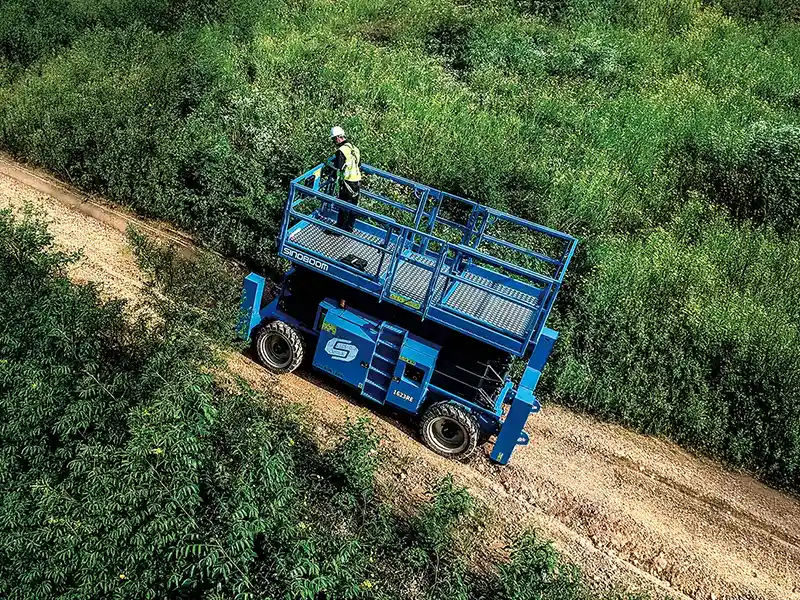
The same pragmatism applies to the energy transition, which is unfolding along a split path. Diesel remains dominant in heavy-duty and remote environments, while electrification is gradually appearing in more controlled settings such as airports, urban projects, logistics hubs, and indoor work. The movement is uneven, and likely to remain so for some time.
“Adoption will vary by country and sector,” Palacioglu explains, “but there is no question that electrification will play a major role.” That unevenness is now part of the operating reality rather than a temporary stage. Sinoboom’s move into telehandlers fits within the same broader positioning. The Middle East is structurally suited to the category because of the scale and intensity of construction and industrial activity, but also because procurement behaviour is shifting towards performance-plus-support evaluation rather than legacy preference alone. “The Middle East is absolutely a strategic market for our telehandler programme,” Palacioglu notes.
Regional strength
Established European manufacturers continue to hold strong positions, but the evaluation criteria are widening. Brand history matters, but not enough on its own. What ultimately ties all of this together is the role the Middle East and Africa region plays in defining how OEMs are judged globally. This region is a stress-test environment. If a support model works here, it tends to work elsewhere. If it fails here, it rarely scales.
“The Middle East and Africa are absolutely critical to our ambition,” Palacioglu concludes. “This region influences our growth and how we define ourselves as a global OEM.” And in a market where uptime is the only metric that consistently holds weight, definition is not theoretical. It is proven in the field, every day the machines are running.
Sponsored by
Sinoboom
Sinoboom Founded in 2008 is the first private-owned Chinese MEWP manufacturer and has been focusing on the industry for over 17 years. Starting from the research and development of boom lifts, Sinoboom is the Chinese brand with the strongest accumulation of boom lift technology
7 main product lines: Telescopic Boom, Articulating Boom, Scissor, telehandler, Spider Truck-mounted and Vertical Mast Lift. Multiple site applications: Construction, Infrastructure, Industry & Venues, Shipyards, Petrochemical and more.
Since 2009, our products have been exported to over 100 countries and regions around the world.
Top 9 Global MEWP Manufacturers (Access M20)
Top 49 Global Construction OEMS (Yello Table 2025)


Sponsored by
Sinoboom
Sinoboom Founded in 2008 is the first private-owned Chinese MEWP manufacturer and has been focusing on the industry for over 17 years. Starting from the research and development of boom lifts, Sinoboom is the Chinese brand with the strongest accumulation of boom lift technology
7 main product lines: Telescopic Boom, Articulating Boom, Scissor, telehandler, Spider Truck-mounted and Vertical Mast Lift. Multiple site applications: Construction, Infrastructure, Industry & Venues, Shipyards, Petrochemical and more.
Since 2009, our products have been exported to over 100 countries and regions around the world.
Top 9 Global MEWP Manufacturers (Access M20)
Top 49 Global Construction OEMS (Yello Table 2025)
This article was written and sponsored by Sinoboom.
To feature your business in sponsored content, contact: [email protected]