Construction Equipment
 Cranes
 Material Handling
 Trucks & Trailers
 Vehicles
 Agricultural Equipment
 Live Auctions
Post Date:
Jan 29, 2026
|

Smart On-Site Processing Reshapes Middle Eastern Infrastructure
As infrastructure projects grow in scale and complexity, smart on-site processing is reshaping how materials are sourced, reused, and managed across the Middle East.
Smart On-Site Processing Reshapes Middle Eastern Infrastructure
As infrastructure projects grow in scale and complexity, smart on-site processing is reshaping how materials are sourced, reused, and managed across the Middle East.
Post Date:
Jan 29, 2026
|
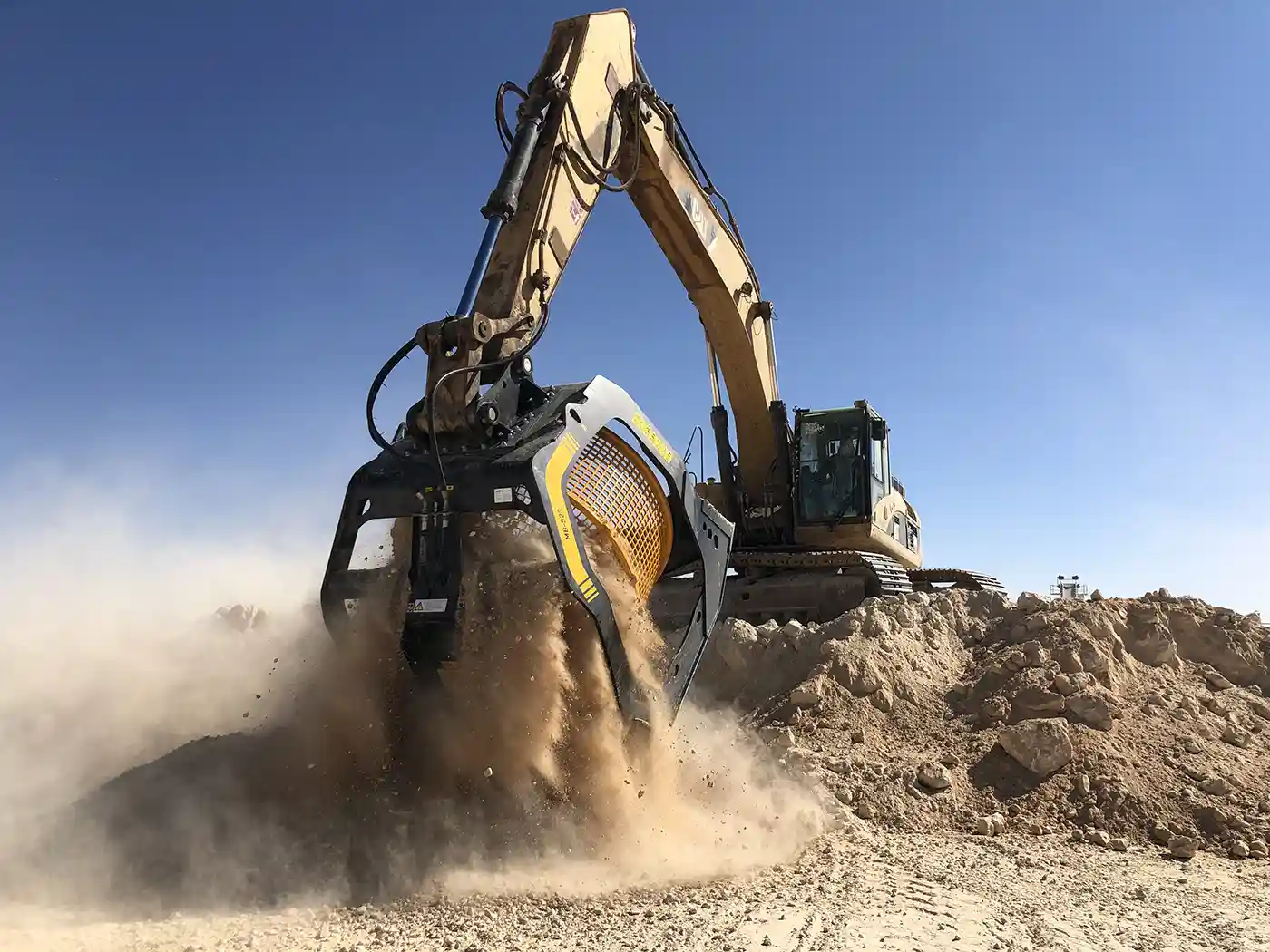
Dubai (PlantAndEquipment.com) - Across the region, infrastructure development is accelerating in both scale and ambition. From major urban redevelopments in Riyadh to new logistics corridors, ports, and industrial hubs, contractors face increasing pressure to manage materials efficiently, sustainably, and directly at the project location. MB Crusher’s approach to smart on-site processing brings material production into the heart of the construction site, reducing logistical complexity while improving control and efficiency.
MB Crusher promotes a construction model in which materials are not treated as waste but as valuable resources. Using MB attachments, contractors can process excavated material and demolition debris directly at the job site. This reduces material transport, limits quarry extraction, and cuts overall project costs while maintaining consistent output quality.
Several projects across the region demonstrate how this approach delivers measurable results.
Riyadh’s Urban Evolution
In Riyadh’s city centre, a skyscraper project illustrates how MB attachments are redefining foundation work. BF90.3 and BF120.4 crusher buckets, paired with an MB-S18 screening bucket, convert excavated limestone and granite into construction grade aggregate without leaving the site.
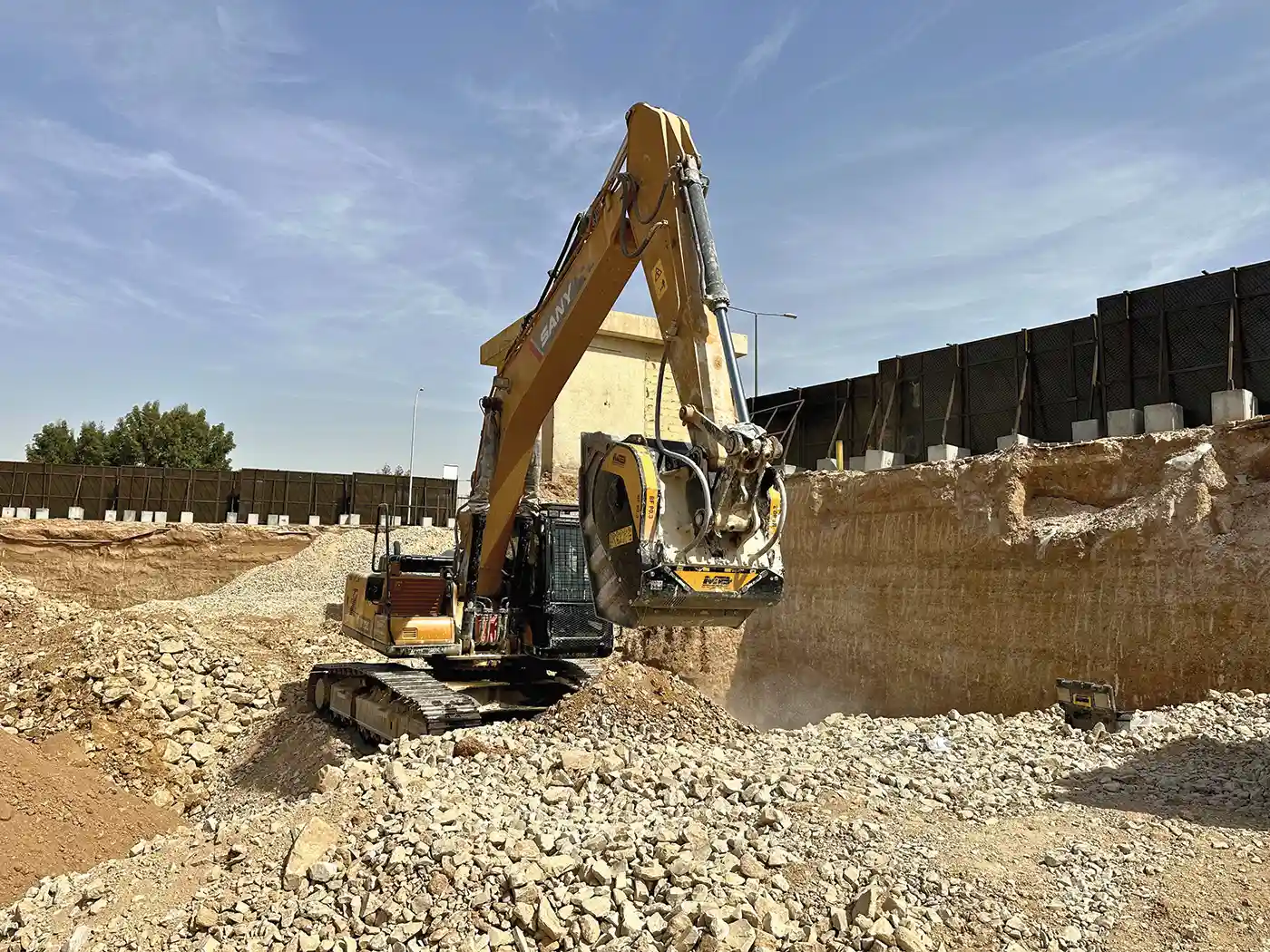
The process follows four clear stages. Excavation first extracts natural stone that would traditionally be transported through congested urban streets. The screening bucket then separates fine material from larger rock. Crusher buckets reduce oversized material on site, and a final screening pass delivers accurately sized aggregate for drainage layers, sub bases, and foundation bedding.
This method lowers hauling costs, reduces emissions, and eliminates delays caused by urban traffic. Materials move metres rather than kilometres.
In Riyadh’s Al Nakheel district, similar efficiencies are achieved on a large scale. A BF135.8 crusher bucket working alongside an MB-S23 screening bucket processes thousands of cubic metres of demolition debris. As the district develops into a cultural destination, waste material is repurposed for reuse within the project. Contractors reduce transport requirements while aligning with Saudi Vision 2030 sustainability objectives.
Regional Applications
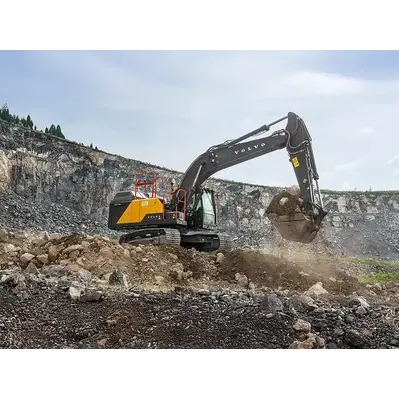
Beyond Saudi Arabia, MB Crusher technology has proven effective across major regional developments. In Djibouti, the USD 3.5 billion International Free Trade Zone relied on on-site crushing to manage large volumes of basalt. A BF120.4 mounted on a Volvo EC3800L excavator processed more than one million cubic metres of material for road construction.
By recycling material directly on site, the project reduced dependence on imported aggregate, lowered material costs, and supported the infrastructure requirements of the Belt and Road Initiative.
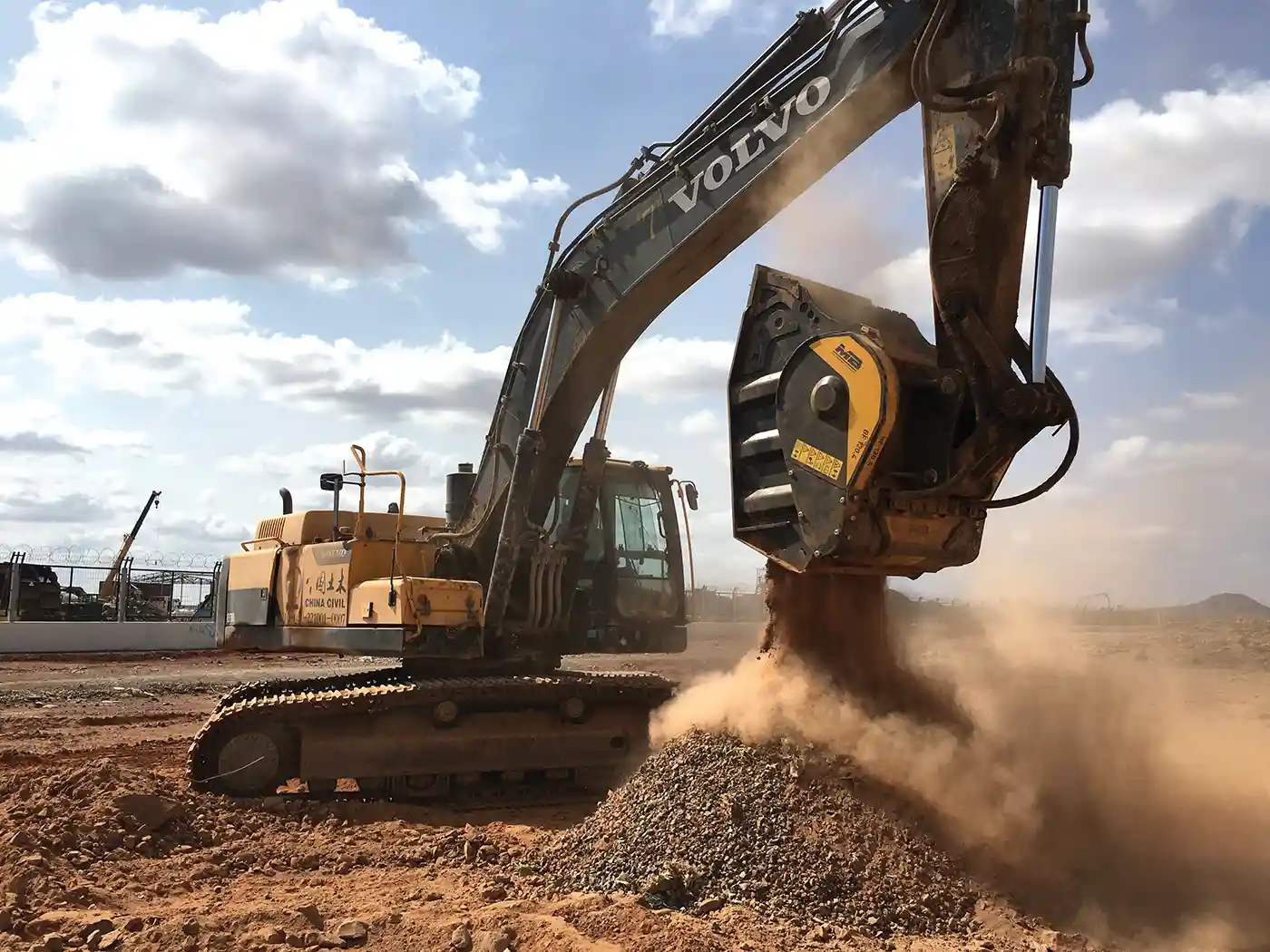
The Multi-Functional Excavator
From excavation to final construction, the principle remains consistent. Processing takes place within the footprint of the jobsite itself. Smart on site processing allows contractors to respond quickly to changing conditions, maintain control over material quality, and reduce reliance on external suppliers.
This adaptability is critical for large scale developments such as NEOM, the Red Sea Project, and major urban expansion programmes, where space constraints and complex logistics demand flexible equipment solutions.
Vision 2030 Alignment
Saudi Arabia, the UAE, Egypt, Qatar, and Kenya are pursuing infrastructure led economic diversification under their respective Vision 2030 strategies. MB Crusher attachments support these objectives by converting waste into reusable materials, strengthening circular economy practices, and reducing reliance on virgin resources.
Screening buckets remove contaminants and prepare material for further processing, while crusher buckets produce high quality aggregate suitable for immediate use. Together, they eliminate the need for external crushing plants and suppliers, helping contractors reduce environmental impact while accelerating project schedules.
CONEXPO-CON/AGG Preview
MB Crusher will mark its 21st year at CONEXPO-CON/AGG with two interactive booths at the Las Vegas trade show, running from 3 to 7 March 2026. The Platinum Lot booth P7733 will feature heavy duty crushing and screening buckets, screeners, pulverizers, and grinders. The Silver Lot booth SV2045 will present compact equipment designed for tight jobsite conditions.
Live demonstrations will showcase real world applications, allowing visitors to see on-site processing solutions in operation and examine the equipment up close.
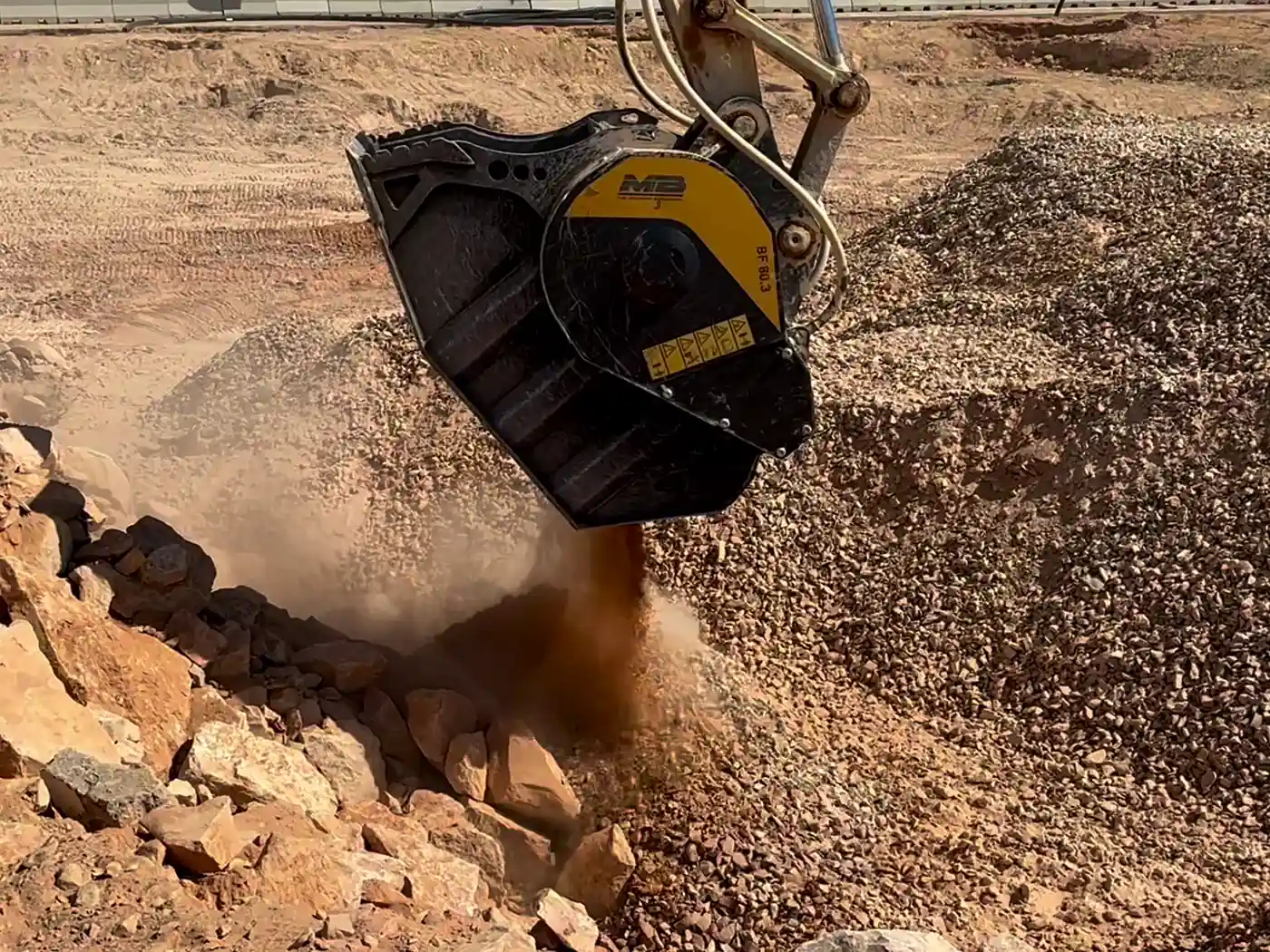
MB Crusher’s compact and adaptable BF80.3 crusher bucket is ideal for crushing and recycling.
From Concept to Reality
Smart on-site processing is no longer a future concept. It is actively shaping infrastructure development across the region. Excavators equipped with MB attachments convert debris into construction materials, reduce transport related emissions, and lower operational costs.
Projects in Riyadh, Djibouti, Egypt, and beyond demonstrate consistent performance benefits. As Vision 2030 programmes progress, contractors who adopt on-site processing gain a competitive advantage while contributing to long term sustainability objectives.
The construction site has evolved. Multi-functional excavators are replacing standalone machines. Waste becomes a resource. Infrastructure projects in the Gulf and wider Middle East are setting new benchmarks for efficiency and sustainability.